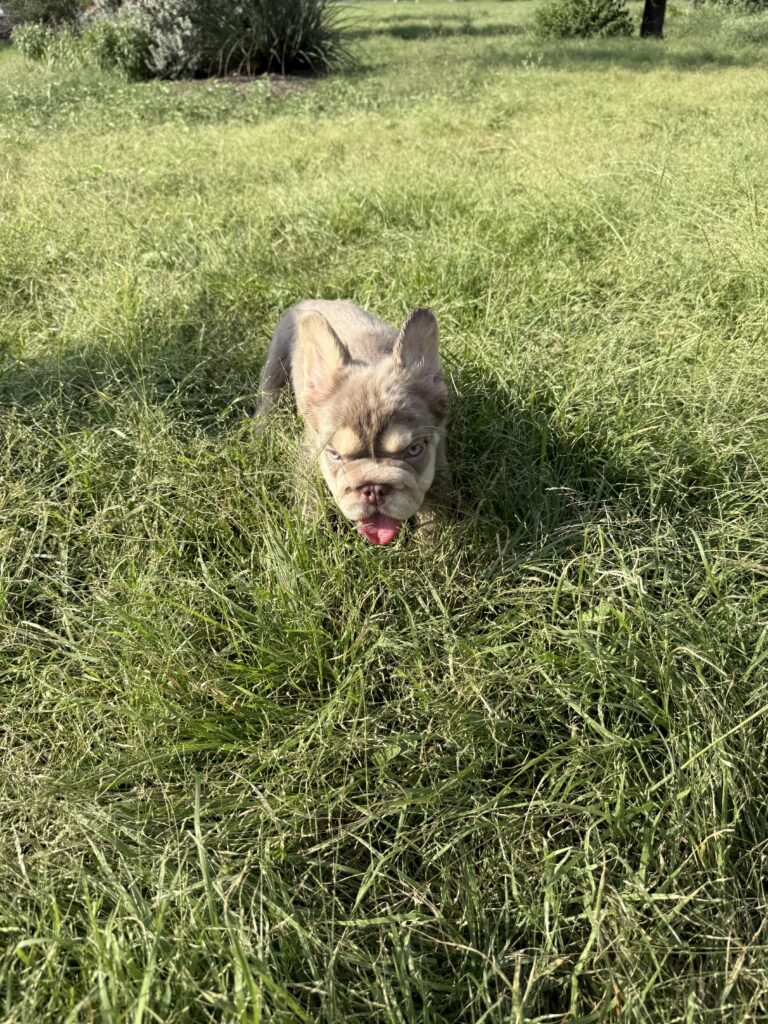
Texas summers bring intense sunshine, high humidity, scorching sidewalks, and temperatures that can remain uncomfortable well into the evening. While the heat can be challenging for any dog, it can be especially dangerous for a French Bulldog.

Frenchies are affectionate, playful, and full of personality, but their flat faces and shortened airways make it more difficult for them to cool themselves efficiently.
That does not mean your Frenchie cannot enjoy summer. It simply means that Texas Frenchie owners must take additional precautions.
This guide explains how to keep your French Bulldog safe, comfortable, hydrated, and happy throughout the hottest months of the year.
Why Are French Bulldogs So Sensitive to Heat?
French Bulldogs are classified as a brachycephalic breed, meaning they have a short skull, flat face, and compressed upper airway.
Unlike humans, dogs do not cool themselves by sweating across most of their bodies. They primarily regulate their body temperature through panting.
When a dog pants, air moves through the mouth and airways, helping moisture evaporate and release heat. For a Frenchie, this cooling process is less efficient because of the breed’s shortened nasal passages and restricted airway structure.
When a French Bulldog becomes hot, excited, stressed, or physically active, breathing can become increasingly difficult. The harder the dog pants, the more strain is placed on the airway.
This can create a dangerous cycle in which the Frenchie becomes hotter while simultaneously struggling to breathe efficiently.
How Hot Is Too Hot for a French Bulldog?
There is no single safe temperature for every Frenchie. Your dog’s age, weight, fitness level, airway health, activity level, and access to shade can all affect heat tolerance.
Humidity is also important. High humidity makes panting less effective because moisture evaporates more slowly.
A temperature that feels manageable to you may already be uncomfortable or unsafe for your French Bulldog.
As temperatures rise, outdoor activity should be reduced. During severe Texas heat, your Frenchie should remain primarily inside an air-conditioned environment.
Use Extra Caution When:
- The outdoor temperature is above 80°F.
- Humidity levels are high.
- There is little wind or shade.
- The pavement is hot.
- Your Frenchie is overweight.
- Your dog is a puppy or senior.
- Your Frenchie has noisy or restricted breathing.
- Your dog has previously experienced overheating.
Never assume your dog is safe simply because the walk is short. Overheating can develop quickly, especially during physical activity or excitement.
Signs Your Frenchie May Be Overheating
Recognizing the early signs of heat stress can prevent a dangerous emergency.
Watch your French Bulldog closely for:
- Heavy or unusually rapid panting
- Noisy, strained, or raspy breathing
- Excessive drooling
- A wide or curled tongue
- Bright red or unusually pale gums
- Restlessness or anxiety
- Refusing to walk
- Frequently stopping or lying down
- Weakness or unsteady movement
- Vomiting or diarrhea
- Confusion or poor responsiveness
- Collapse or loss of consciousness
Panting after light activity should not be dismissed as normal, particularly when it is louder, faster, or more intense than usual.
A Frenchie that suddenly slows down, lies on the ground, or refuses to continue walking may be communicating that it cannot safely manage the heat.
Heat Exhaustion vs. Heatstroke
Heat exhaustion occurs when your dog’s body begins struggling to maintain a safe temperature. At this stage, you may notice intense panting, drooling, fatigue, and reluctance to continue moving.
Heatstroke is a life-threatening veterinary emergency. It can affect the brain, kidneys, liver, digestive system, blood-clotting mechanisms, and other vital organs.
The outcome can depend on how high the dog’s temperature becomes, how long the overheating continues, and how quickly veterinary treatment begins.
Do not wait for your Frenchie to collapse before taking action. Early intervention can save your dog’s life.
1. Schedule Walks During the Coolest Hours
During a Texas summer, timing matters.
Plan walks for:
- Early morning, ideally around sunrise
- Late evening, after the pavement and air have cooled
- Brief potty breaks during hotter hours
Avoid long walks during the middle of the day. In many areas of Texas, dangerous heat can continue through the late afternoon and early evening.
Check the temperature, humidity, and heat index before going outside. Even after sunset, concrete and asphalt may continue releasing stored heat.
Keep walks short and allow your Frenchie to set the pace. Do not force your dog to continue if it begins slowing down, panting heavily, or trying to return home.
2. Check the Pavement Before Every Walk
Texas sidewalks, roads, patios, and artificial turf can become dangerously hot.
Before allowing your Frenchie to walk on a surface, place the back of your hand against it for several seconds. When it feels too hot for your hand, it is too hot for your dog’s paws.
Hot surfaces can cause:
- Painful paw-pad burns
- Blistering
- Redness
- Limping
- Reluctance to walk
- Licking or chewing the feet
Choose shaded sidewalks, natural grass, or cooler walking routes whenever possible.
Protective dog boots may help protect the paws, but they do not make extreme temperatures safe for exercise.
3. Keep Fresh Water Available
Your Frenchie should have access to clean, fresh water throughout the day.
Place water bowls in several areas of your home, especially if you have a large house or multiple floors. Wash the bowls regularly and refill them often.
When leaving home, carry:
- A bottle of clean drinking water
- A collapsible dog bowl
- A cooling towel
- Your veterinarian’s phone number
- The address of the nearest emergency veterinary hospital
Offer small amounts of water during and after activity. Do not force a distressed or struggling dog to drink.
Hydration is essential, but water alone cannot prevent heatstroke when a Frenchie remains in a dangerously hot environment.
4. Make Air Conditioning a Priority
Fans can improve air circulation, but they may not be enough during intense Texas heat.
Because dogs regulate body temperature differently from humans, a fan blowing warm air may provide limited cooling. Air conditioning is much more reliable for maintaining a safe indoor environment.
Provide your Frenchie with:
- A cool indoor resting area
- Good airflow
- Access to tile or another cool surface
- Fresh drinking water
- Closed curtains or blinds during peak sunlight
- A cooling mat designed for dogs
Avoid placing your dog’s crate or bed beside a sunny window.
During a power outage, move your Frenchie to an air-conditioned location as soon as possible. This may include a pet-friendly hotel, a family member’s home, or another safe climate-controlled environment.
5. Never Leave a Frenchie in a Parked Vehicle
Never leave your French Bulldog alone inside a parked vehicle, even for a few minutes.
A vehicle’s interior can heat rapidly, even when:
- The windows are partially open
- The car is parked in the shade
- The outside temperature does not feel extreme
- You plan to return quickly
Remote-start air conditioning should not be treated as a guarantee of safety. Engines can stop, systems can fail, and vehicles may shut off automatically.
When your destination does not allow dogs, leave your Frenchie safely at home.
6. Use a Harness Instead of a Neck Collar
A well-fitted harness is generally a better choice for walking a French Bulldog because it reduces pressure on the neck and airway.
Choose a lightweight, breathable harness that:
- Does not press against the throat
- Allows comfortable shoulder movement
- Fits securely without rubbing
- Does not restrict chest expansion
- Can be removed quickly in an emergency
Avoid pulling or dragging your Frenchie during a walk. Pressure around the neck can make breathing more difficult, particularly when the dog is already panting.
7. Limit Intense Exercise and Excitement
French Bulldogs do not require long-distance running or strenuous outdoor exercise.
During hot weather, choose controlled indoor activities such as:
- Short training sessions
- Food puzzles
- Snuffle mats
- Hide-and-seek games
- Gentle indoor fetch
- Scent-based enrichment
- Chew toys
- Calm social interaction
Excitement can cause intense panting even when your Frenchie is not exercising. Visitors, car rides, outdoor events, dog parks, and energetic play sessions can all increase breathing effort.
Monitor your dog during exciting situations and provide frequent opportunities to rest in a cool, quiet area.
8. Maintain a Healthy Weight
Excess weight increases the physical effort required for movement and breathing. It can also make temperature regulation more difficult.
Keeping your Frenchie at a healthy weight may reduce unnecessary strain on the respiratory system, joints, and cardiovascular system.
Ask your veterinarian to help determine your dog’s ideal weight and body condition.
Healthy weight management should include:
- Appropriate portion sizes
- Limited high-calorie treats
- Age-appropriate nutrition
- Regular low-intensity activity
- Routine veterinary assessments
9. Consider Your Frenchie’s Individual Risk Factors
Some French Bulldogs require even stricter heat precautions.
Higher-risk Frenchies may include:
- Puppies
- Senior dogs
- Overweight dogs
- Dogs with heart conditions
- Dogs with severe snoring or noisy breathing
- Dogs with narrow nostrils
- Dogs with brachycephalic obstructive airway syndrome
- Dogs recovering from illness or surgery
- Dogs with a previous history of heat stress
Schedule a veterinary examination when your Frenchie regularly has difficulty breathing, cannot tolerate mild activity, frequently gags, collapses, or has unusually noisy breathing.
These symptoms should not automatically be accepted as normal characteristics of the breed.
10. Be Careful Around Pools and Water
A swimming pool may look like a perfect way to cool down, but many French Bulldogs are poor swimmers because of their front-heavy bodies, short legs, and flat faces.
Never leave your Frenchie unattended around:
- Swimming pools
- Ponds
- Lakes
- Rivers
- Hot tubs
- Deep backyard water features
Use a properly fitted canine life jacket near water. It should provide strong flotation support and include a handle that allows you to lift your dog quickly.
Even while wearing a life jacket, your Frenchie must remain within arm’s reach.
A shallow splash pad or small dog pool can provide supervised cooling, but the water should be clean, comfortably cool, and shallow enough for your dog to stand safely.
What to Do When Your Frenchie Starts Overheating
When you suspect overheating, treat the situation seriously.
Step 1: Stop All Activity
Carry or calmly guide your Frenchie into an air-conditioned building or shaded area. Do not make the dog walk farther than necessary.
Step 2: Begin Gradual Cooling
Apply cool, but not ice-cold, water to the body. Focus on areas such as:
- The belly
- The chest
- The groin
- The armpits
- The paw pads
You may also place your dog near air conditioning or a fan while the coat is damp.
Avoid ice baths and extremely cold water. Sudden intense cooling may interfere with the body’s ability to release heat effectively.
Step 3: Offer Water Carefully
Offer small amounts of cool water when your Frenchie is alert and able to drink normally. Do not force water into the mouth.
Step 4: Contact a Veterinarian Immediately
Call your veterinarian or the nearest emergency veterinary clinic while beginning the cooling process.
Even when your Frenchie appears to recover, internal complications may still be developing. A veterinary examination is important after a significant overheating episode.
What Not to Do During a Heat Emergency
- Do not wait to see whether the symptoms disappear.
- Do not place your dog in an ice bath.
- Do not cover the dog with heavy wet towels for long periods.
- Do not force the dog to drink.
- Do not give human medication.
- Do not make the dog walk to the car.
- Do not assume normal behavior means the danger has passed.
- Do not delay professional veterinary care.
Heatstroke can continue affecting the body after the dog has been moved into a cooler environment.
Creating a Frenchie Summer Safety Kit
Prepare a portable heat-safety kit before summer begins.
Include:
- Fresh bottled water
- A collapsible water bowl
- A cooling towel
- A canine cooling mat
- A battery-powered fan
- A spare lightweight harness
- Waste bags
- Your veterinarian’s contact details
- Emergency veterinary clinic information
- A canine first-aid kit
- A pet life jacket for water activities
Keep the kit near your front door or inside your travel bag. Do not leave bottled water, medication, or heat-sensitive supplies inside an extremely hot vehicle.
A Safe Texas Summer Routine for Your Frenchie
Early Morning
Take a short walk while the temperature and pavement are still cool. Offer water afterward and allow your dog to rest indoors.
Midday
Keep your Frenchie inside with air conditioning. Use puzzle toys, gentle training, and indoor enrichment instead of outdoor exercise.
Late Afternoon
Limit outdoor time to quick bathroom breaks. Stay in shaded areas and closely monitor your dog’s breathing.
Evening
Check the temperature and pavement again. When conditions are comfortable, take a short, relaxed walk.
Before Bed
Offer fresh water and make sure your Frenchie’s sleeping area is cool and properly ventilated.
Frequently Asked Questions
Can French Bulldogs Live Comfortably in Texas?
Yes. French Bulldogs can live happily in Texas when their owners provide air conditioning, limit outdoor activity, maintain hydration, avoid hot pavement, and monitor closely for signs of overheating.
Texas Frenchies should be treated primarily as indoor dogs during hot weather.
Can I Walk My Frenchie During Summer?
Yes, but walks should take place during the coolest parts of the day. Keep them short, choose shaded routes, check the pavement, carry water, and stop immediately when your dog begins panting heavily or slowing down.
Are Cooling Vests Safe for French Bulldogs?
A properly fitted cooling vest may help during brief outdoor activity, but it does not make extreme heat safe. The vest should not restrict the chest, neck, or breathing.
Always supervise your Frenchie while using cooling equipment.
Should I Shave My French Bulldog During Summer?
French Bulldogs have short coats and generally do not need to be shaved. Regular brushing can remove loose hair and help keep the coat clean.
Speak with your veterinarian or a professional groomer before making major coat changes.
Can French Bulldogs Swim to Cool Down?
Some French Bulldogs may paddle briefly, but many are not strong or reliable swimmers. Always use a canine life jacket and maintain constant hands-on supervision around water.
Is Heavy Panting Normal for a Frenchie?
Some panting is normal after activity or excitement. However, intense, prolonged, noisy, or distressed panting can indicate overheating or breathing difficulty.
Move your Frenchie to a cool area and contact your veterinarian when the breathing does not improve quickly.
What Temperature Should I Keep My House for My Frenchie?
There is no universal indoor temperature for every dog, but the home should remain consistently cool and comfortable. Monitor your Frenchie rather than relying only on the thermostat.
Panting while resting indoors may indicate that the room is too warm or that your dog has an underlying respiratory issue.
Final Thoughts
Texas summers require Frenchie owners to plan ahead.
Your French Bulldog depends on you to choose safe walking times, provide air conditioning, check the pavement, limit strenuous activity, and respond quickly when signs of overheating appear.
The most important rule is simple: when you are unsure whether it is too hot, keep your Frenchie inside.
Skipping a walk or outdoor event is always better than risking heatstroke. With a thoughtful routine and careful supervision, your Frenchie can remain safe, comfortable, and happy throughout the Texas summer.